Rarely does Apple dedicate an entire event to a single product category, but this time it was all about your home.
Earlier this week, Apple held its “Welcome Home” event, introducing a new collection of products designed to bring the Apple experience further into our homes and daily lives. While we saw updates to the HomePod mini and Apple TV 4K, the star of the show was undoubtedly HomeView, Apple’s first dedicated smart home hub and display. It’s a product that has been rumored for quite a while, and it finally looks like Apple is ready to take on a market that Amazon and Google have been competing in for years. While designed for a center to control your home accessories, the use goes beyond just a control center. But after seeing what HomeView has to offer, I can’t help but wonder whether this is a product people actually need.
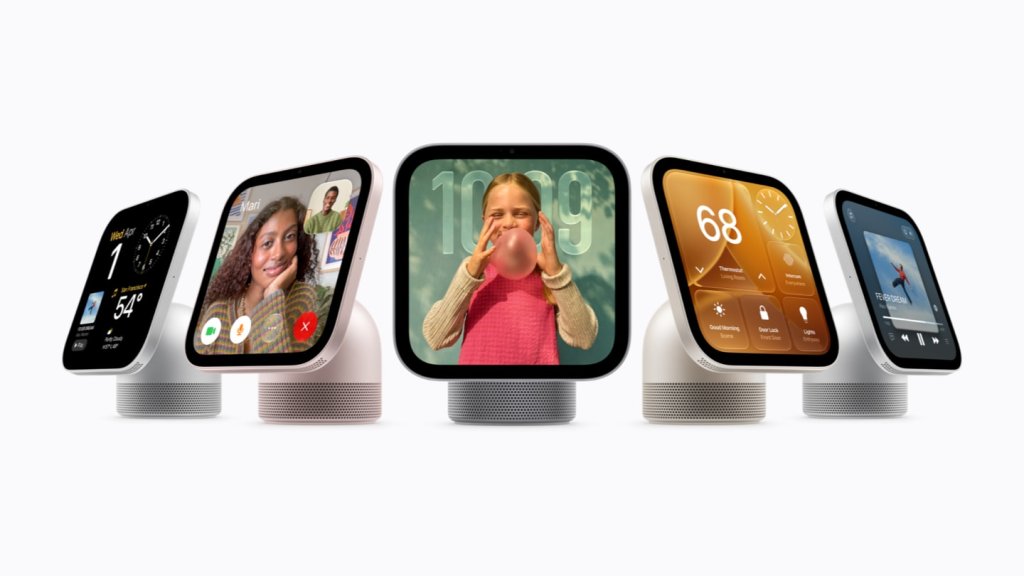
HomeView features a 7-inch square Liquid Retina display connected to a domed speaker base, with a stainless steel hinge that allows you to adjust the screen to your preferred viewing angle. It also includes an A18 chip, a FaceTime camera, and a sound system designed to deliver room-filling audio. The standard tabletop model comes in silver, starlight, rose pink, and space gray, while the wall-mounted version is available in just silver and space gray. Both models cost $299, with preorders open now and general availability beginning November 13. HomeView is designed to sit on a kitchen counter, nightstand, or side table, while the wall-mounted version is intended for spaces like an entryway or hallway. Beyond the hardware, HomeView brings together a lot of what people already use across Apple’s ecosystem, including Music, Podcasts, Calendar, Messages, FaceTime, Reminders, and smart home controls.
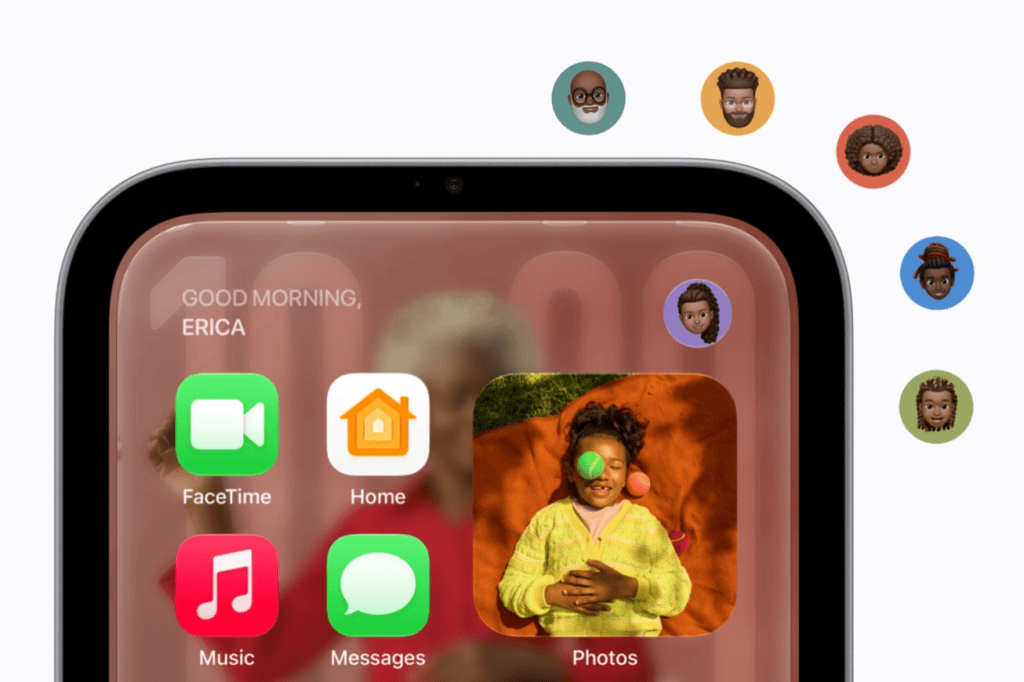
One of the most interesting things about HomeView is how it handles multiple people. Rather than simply being a shared screen that everyone in the household uses in the same way like any other device, HomeView can recognize up to six people and give each person their own personalized Home Screen with apps and widgets. The account switching is a highly requested feature for iPad as well, and now coming to HomeView. This includes access to personal information from apps like Messages, Calendar, and Find My, while still allowing everyone to enjoy shared photo albums and music. On top of that, HomeView can control compatible smart home accessories, display up to nine camera feeds at once, make FaceTime calls, and help with everyday tasks like looking up recipes and setting timers. With Siri AI powered by Apple Intelligence, users can also ask questions and access personal information across their apps when paired with a compatible device. Apple describes the product as being “designed to be shared by everyone in the home yet feel completely personal to each user,” which I think sums up the idea pretty well. It’s meant to be a shared device without making everyone’s experience exactly the same.
Apple is arriving at this market quite a bit later than its competitors. Amazon has been developing its Echo Show lineup for years, while Google has offered its Nest Hub displays as a way to control smart home devices, view information, and enjoy entertainment. These products have already established what a smart home display can look like, so Apple isn’t exactly reinventing the wheel here. Instead, it’s focusing on the overall experience and how HomeView connects with the rest of its products. To me, it almost feels like Apple was forced to enter this market if it wanted to build a more complete smart home ecosystem. The Home app and HomePod already handle plenty of smart home tasks, but neither provides the same dedicated visual experience. Meanwhile, Amazon and Google have continued building out their own ecosystems, and with AI becoming an increasingly important part of technology, Apple needs a place where Siri can be used naturally throughout the day for everyone in the household. Having a device in the kitchen that can pull up a recipe sent in Messages, remind you about your schedule, or control your lights without having to reach for your iPhone makes sense.
Another part of HomeView worth mentioning is how it handles third-party apps. HomeView doesn’t have its own App Store, so users can’t download apps directly onto the device like they can on an iPhone or iPad. Instead, it runs on the same type of software concept as CarPlay, projecting information onto the screen once it detects who’s using it, with compatible third-party apps available in CarPlay also appearing on HomeView. This means apps like Spotify, Audible, and even some rumored streaming apps can become part of the experience through a compatible, paired iPhone, while developers can also extend support to existing iOS video apps. I think this is an interesting approach because it allows Apple to bring more functionality to HomeView without requiring every developer to create an entirely new app specifically for the device. At the same time, the experience depends on app compatibility and developer support, rather than giving users a full App Store to choose from. It will be interesting to see how many third-party apps eventually support HomeView and how much that expands what people can actually do with it.
In my opinion, HomeView is a useful product and creates a great end-to-end user experience for each person of the household at what I consider a fair price for the hardware and features Apple is bringing together. I can see it being especially useful for families who already have several Apple devices and want one central place to manage their home. However, I just don’t know if this is a big market or something people really look for or invest in. Most people already have their phones nearby, and plenty of households get by just fine with a smart speaker (like an Apple one with the HomePod) or the Home app and installing some of the home app and control apps on an iPad with a stand can accomplish most of the uses of the HomeView. While having a dedicated screen certainly makes certain tasks easier, I don’t see an incredible amount of value beyond bringing together features that already exist across Apple’s other products. This is my opinion in general to the home display category, it is niche type of customer that gravitates towards this sector, mostly people who have their entire home mapped out with tech automations and a fully digitally-connected home. Not only that, but I feel like Apple was seemingly forced into the market, with all of their competitors developing new versions and bringing popularity to the product category, where Apple has the opportunity to build a product their own way, with the Apple-spin to it, with their thoughtful design and integration within the ecosystem. Another thing I find a little crazy is the pricing of the wall-mounted version. Apple is charging the same $299 for it as the tabletop model, which I think is quite reasonable compared to the competition, but the mount is sold separately, with the cheapest option starting at $59.95. That brings the starting cost to $358.95 before tax, and other mounting options cost even more. On top of that, the wall-mounted version comes in only two colors compared to the four available on the standard model. I understand that the two versions are designed for different spaces, but it’s still a little odd to pay extra just to mount the device, especially when you have fewer color options to choose from. I think the tabletop version makes much more sense for most people, unless having a screen mounted on the wall is something they specifically want.
Still, I think the potential is there. As Siri becomes more capable and smart home accessories become easier to set up and use, a dedicated hub like HomeView could become much more valuable. Perhaps this is one of those products that seems unnecessary today but becomes much more useful as the technology develops. I think HomeView has the potential to grow into something bigger, but I’m just not sure whether enough people are interested in having a dedicated smart display in their home right now. Apple has created a product that makes sense within its ecosystem, and I’m interested to see how people respond to it. I’m curious to see how the customers respond, and if the demand keeps up to the projected value the product brings.
Here’s a great advertisement from Apple demonstrating a real-life use case for the HomeView:
You can read more from Apple here: Meet Apple HomeView, a new way to enjoy entertainment, stay connected, and manage the home

